

Last Updated: November 19, 2026
Quick Summary
DSO regulatory compliance management software centralizes policies, automates evidence collection, and keeps multi-site dental organizations audit-ready across HIPAA, OSHA, DEA, and Medicaid requirements. Options include customized manuals such as the HIPAA Compliance Manual at $449.97 and the HIPAA & OSHA/Infection Control Bundle at $739.94.
- The compliance software market reached $35.8 billion in 2025 and is projected to hit $39.3 billion in 2026.
- The Medicaid/OIG Compliance Program Manual is built around the OIG's seven fundamental elements.
- Standardization means every location follows the same written procedures, forms, and documentation standard.
- Run quarterly site audits with the same checklist, scored the same way, so trends are visible.
- Ask vendors for a SOC 2 Type II report and a signed HIPAA business associate agreement before signing.
Table of Contents
- Why DSO Regulatory Compliance Management Software Matters
- Best DSO Regulatory Compliance Management Software Options for Dental Groups
- Compliance Training and Credentialing Software: What to Look For
- How to Standardize DSO Compliance Across Locations
- How to Choose the Right Platform for Your Group
- Book a Compliance Review With Dental Compliance
- Frequently Asked Questions
Why DSO Regulatory Compliance Management Software Matters
According to Grand View Research's compliance software market report, the compliance software market reached $35.8 billion in 2025 and is projected to hit $39.3 billion in 2026. Dental groups are part of that spending wave, and for good reason. DSO regulatory compliance management software is the category of tools and systems that centralize policies, automate evidence collection, and keep multi-site dental organizations audit-ready across HIPAA, OSHA, DEA, and Medicaid requirements.
Practice owners and DSO compliance officers often find that tracking requirements in spreadsheets and email threads becomes difficult across multiple locations. A single missed business associate agreement or an expired OSHA training record can trigger significant penalties. Below, we break down the best options for your group and show you exactly how to standardize compliance across locations.
Best DSO Regulatory Compliance Management Software Options for Dental Groups
For dental groups, a customized manual-and-training system built for dental settings is one practical approach. The options below are the regulatory manuals and training products offered here.
| Option | Price | Best For | Format |
|---|---|---|---|
| HIPAA Compliance Manual | $449.97 | Groups needing a complete HIPAA program | Customized manual |
| HIPAA & OSHA/Infection Control Bundle | $739.94 | Practices covering both federal frameworks | Two customized manuals |
| Medicaid/OIG Compliance Program Manual | $449.97 | Groups billing Medicare or Medicaid | Customized program manual |
Price
HIPAA Compliance Manual
Our top pick for HIPAA coverage is the HIPAA Compliance Manual, priced at $449.97. The manual is customized: information about your practice is gathered and used to build the manual, rather than providing a book of blank templates.
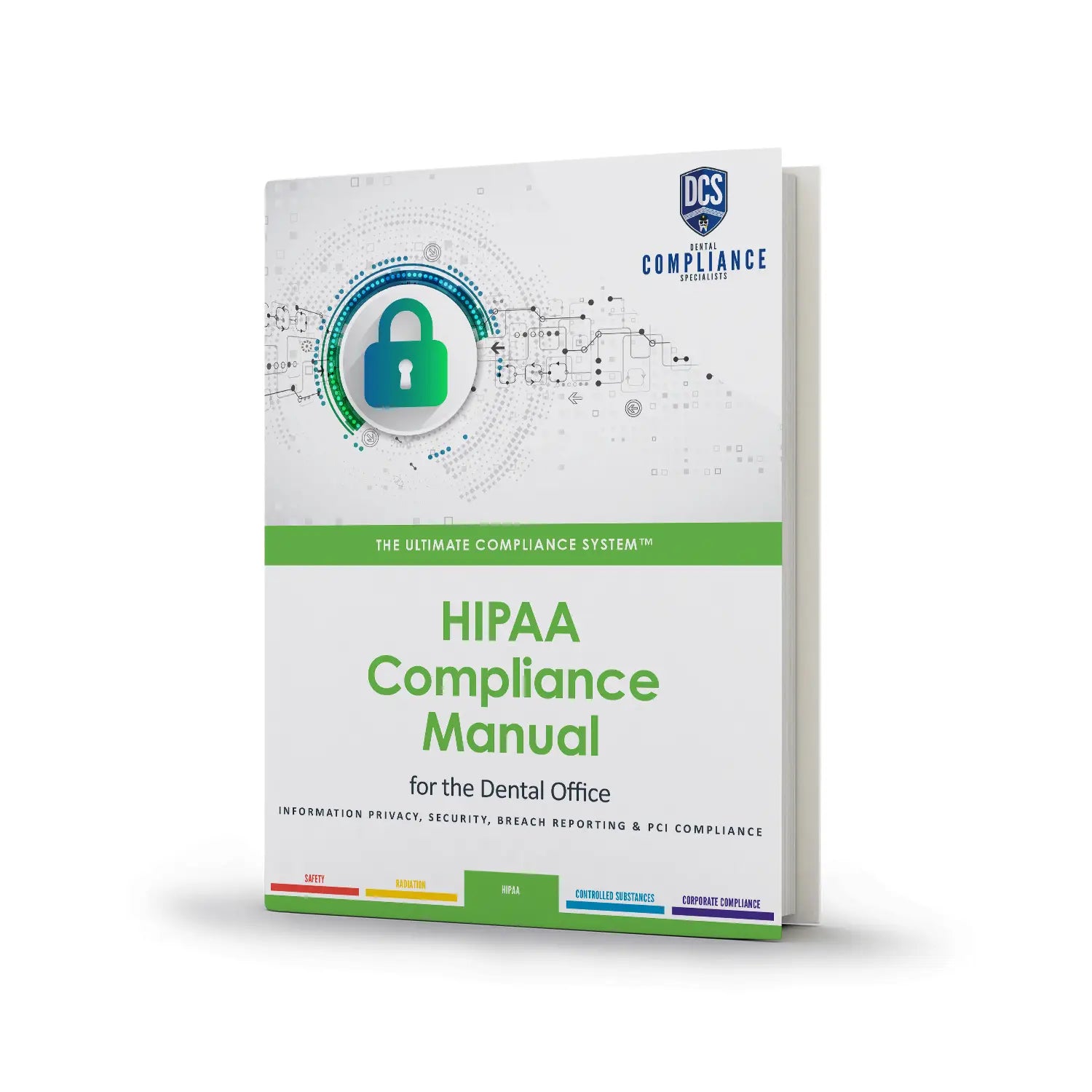
Best for: DSOs that need a complete, defensible HIPAA program without building one from scratch. Skip if: you need OSHA and infection control coverage in the same purchase, in which case the bundle below is the better value.
HIPAA & OSHA/Infection Control Manual Bundle
The bundle at $739.94 combines both manuals. OSHA's General Duty Clause gives inspectors broad authority to cite dental offices for issues well beyond surface safety, from bloodborne pathogen standards to nitrous oxide safety. You can see what the bundle includes before you buy.
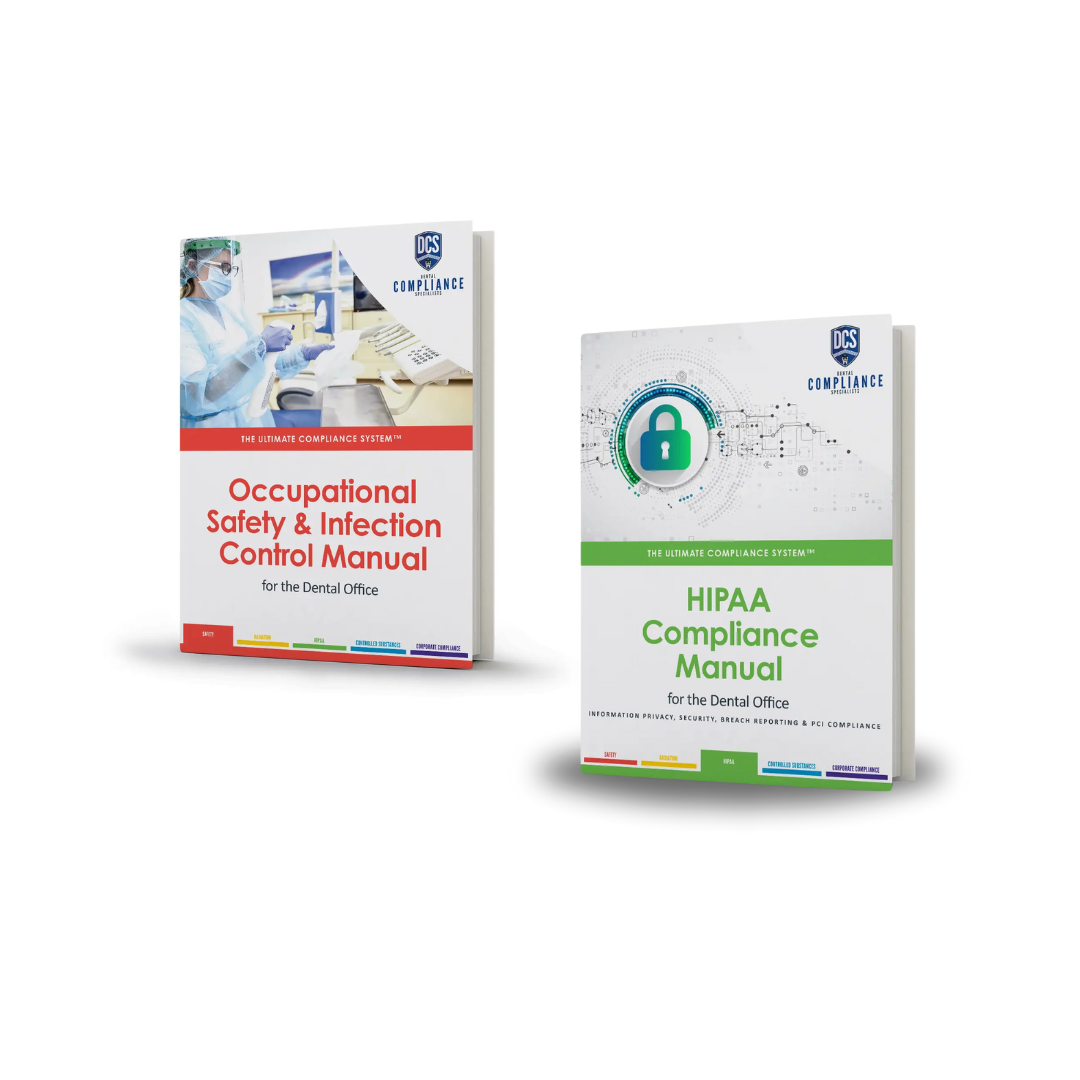
Best for: practices that want one purchase covering both federal compliance obligations. Skip if: you already have a current HIPAA manual and only need OSHA documentation.
Medicaid/OIG Compliance Program Manual
Groups that bill Medicare or Medicaid carry an extra obligation. Section 6401 of the Affordable Care Act requires providers receiving government reimbursement to maintain a compliance program built on the OIG's seven fundamental elements. Review the Medicaid/OIG program manual if your group participates in government programs.
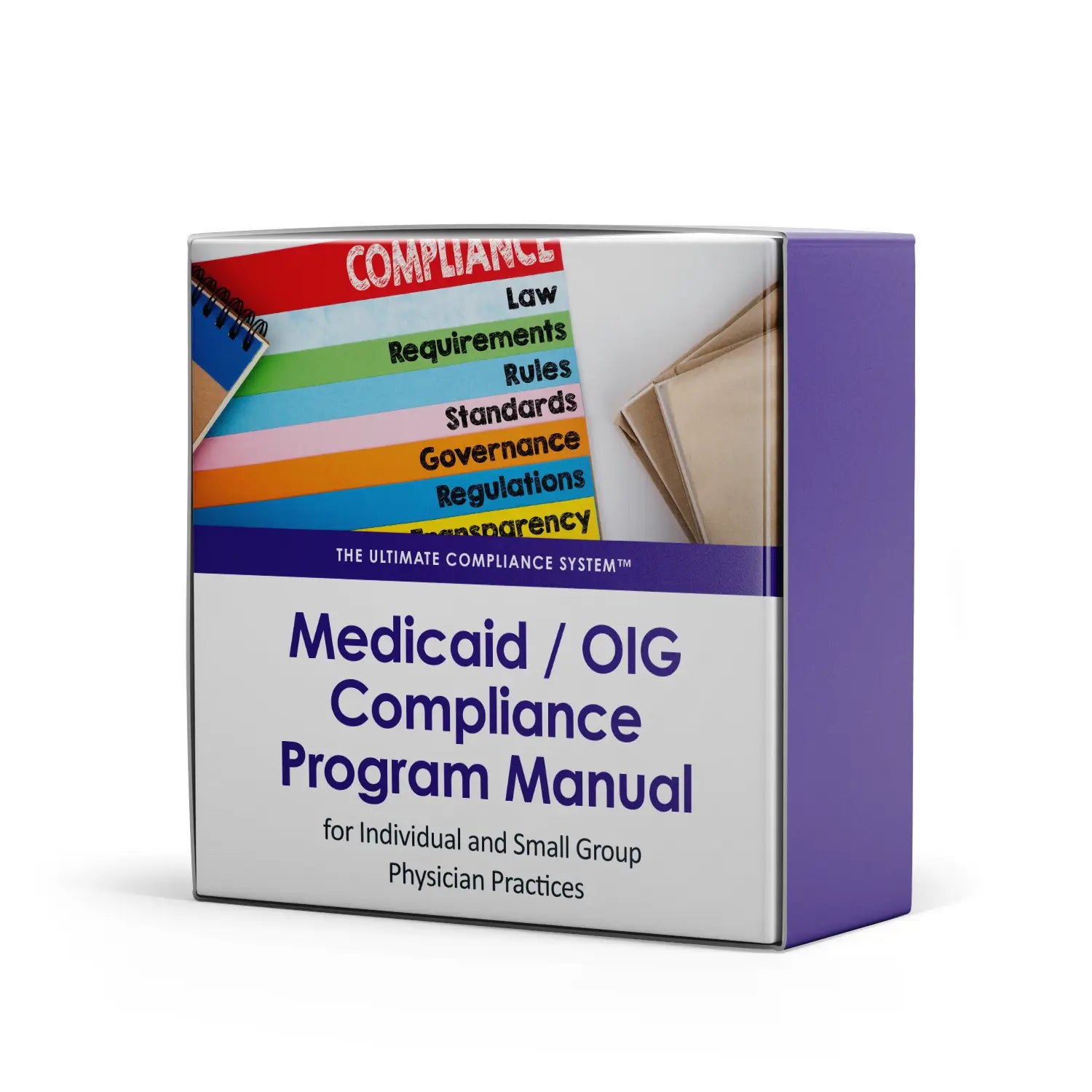
Best for: DSOs with Medicaid, Medicare, or Medicare Advantage revenue. Skip if: your group is entirely fee-for-service private pay.
Compliance Training and Credentialing Software: What to Look For
Training and credentialing is where multi-location groups lose the most time. The right system tracks who completed what, when, and whether the record will survive an audit. Look for role-based course assignment, automatic expiration alerts, and a documented audit trail for every completion.
Our on-demand HIPAA training for dental professionals covers HIPAA Privacy, PCI DSS credit card safety, and cybersecurity awareness.
How to Standardize DSO Compliance Across Locations
Standardization generally means every location follows the same written procedures, uses the same forms, and documents to the same standard.
What makes a DSO different from a generic multi-site business is the regulatory stack each location carries.

The DSO-specific regulatory layers to standardize
- HIPAA. One privacy and security program, one set of business associate agreements, one breach notification procedure, applied identically at every site. The 2013 Final Omnibus Rule raised the stakes on business associate agreements and breach notification, so a missing agreement at one location is a group-wide exposure.
- OSHA. Bloodborne pathogens, hazard communication, and the General Duty Clause apply at every location. Written plans, training records, and exposure control plans should be identical in structure, with site-specific details filled in.
- State dental boards. Licensure, sedation permits, and scope-of-practice rules vary by state. A group operating across state lines needs a matrix that maps each requirement to the locations it touches, rather than a single national policy.
- Radiation safety. Radiographic equipment registration, dosimetry, and machine inspection requirements are typically state-administered. Standardize the documentation and the inspection calendar even where the rules differ.
A repeatable standardization sequence
- Centralize the policy library. One master set of policies, with a documented state addendum where rules differ. No location maintains its own version.
- Map requirements to locations. Build a matrix showing which frameworks and state rules apply at each site, so audits and training are scoped correctly.
- Assign a site champion. The parent compliance owner sets the standard; a named person at each location executes it and is accountable for evidence.
- Audit on a fixed schedule. Quarterly site audits with the same checklist, scored the same way, so trends are visible across the group.
- Close the loop. Every finding gets a corrective action, an owner, and a due date, tracked in the same system that holds the evidence.
For a deeper step-by-step framework, read our guide on how to standardize DSO compliance across locations. The short version: centralize policies, delegate execution, and verify with audits.
A DSO Compliance Audit Checklist You Can Adapt
Use this checklist at each location, quarterly:
- Current HIPAA manual on site and reviewed within 12 months
- Signed business associate agreements on file for every vendor with ePHI access
- OSHA written plans updated, including bloodborne pathogen and hazard communication
- Annual OSHA and HIPAA training completed and documented for every employee
- Sterilizer logs current and matching CDC infection control guidance
How to Choose the Right Platform for Your Group
Choosing well means matching the tool to your actual regulatory exposure, not buying the biggest system available. Generic compliance buyers evaluate a platform on framework coverage and price.
Start with a gap analysis. List every framework that applies to your group, HIPAA Privacy, Security, and Breach Notification Rules; OSHA bloodborne pathogens and hazard communication; DEA registration and controlled substance logging; state dental board rules; radiation safety requirements; Medicaid and Medicare Advantage program integrity rules, then score each option against coverage, customization, and implementation effort.
DSO-specific evaluation criteria
Most practitioners find that five criteria separate a platform built for dental groups from a generic enterprise tool:
- Multi-site hierarchy. Can the system model your actual structure, a parent entity, regional managers, and individual locations, so that a policy published once flows to every site but each site can document its own completion? Flat systems force you to duplicate work per location.
- Role-based assignment. Hygienists, front desk staff, associate dentists, and the compliance officer do not need the same training or the same attestations. Look for assignment by role and by location, not by user.
- Evidence capture tied to the requirement. The system should link each requirement to the artifact that proves it, a signed business associate agreement, a sterilizer log, a training certificate, so an auditor can trace from rule to record without a spreadsheet.
- State-level rule support. Federal frameworks are the floor. If you operate in multiple states, the platform needs a way to layer state dental board and radiation safety requirements on top of the federal baseline without forking your policy library.
- Audit export. When a payer or regulator requests records, can you produce a complete, dated package for one location in hours rather than weeks? Ask for a live demonstration, not a slide.
Vendor security and data sovereignty
A compliance platform holds your most sensitive evidence, including ePHI and personnel records. Vet the vendor's own security posture before you sign. Ask for a current SOC 2 Type II report, a HIPAA business associate agreement that matches your obligations, documented encryption at rest and in transit, role-based access controls with audit logging, and a written incident response plan.
Watch out: a platform that stores ePHI without a signed business associate agreement creates a reportable gap the moment it is discovered, regardless of how good the software is.
Implementation timeline and change management
The day-to-day reality of any compliance system is onboarding staff. Plan for a named owner at the parent entity and a site champion at each location.
Three questions decide most purchases. First, does the system cover the specific frameworks you face, including state-level rules? Second, is the documentation customized to your practice or generic? Third, how long until your team is actually using it?
Book a Compliance Review With Dental Compliance
Compliance gaps rarely announce themselves. They surface during an inspection, a breach, or a Medicaid audit, and by then the penalty is already in motion. The groups that stay ahead treat compliance as an operating system, not an annual project.
Dental Compliance builds customized programs for dentists and small to middle-market DSOs, with expert training and thorough audits focused on OSHA, HIPAA, DEA, and Medicaid.
Frequently Asked Questions
What features should dso compliance software include?
Look for a centralized repository for policies and standard operating procedures, automated workflows for training and credentialing renewals, an audit trail that records who completed what and when, and a compliance dashboard that shows each location's posture at a glance. Real-time reporting and continuous monitoring matter more than a large template library, because a DSO's risk sits in the gaps between sites. Also confirm the tool covers OSHA, HIPAA, DEA and Medicaid duties, not just one framework, and that it can hold an incident management log tied to corrective actions.
How can a dental support organization standardize compliance across multiple locations?
Start with one written policy set that every site adopts, then map each requirement to an owner, a due date and a piece of evidence. A shared regulatory library keeps the source documents identical, while location-level checklists confirm each office actually performs the task. Assign a compliance officer and committee at the group level, run internal monitoring on a fixed schedule, and track findings in one incident log so corrective actions close out visibly. Dental Compliance builds customized programs around this structure for small and mid-market DSOs, including training and audits.
How does compliance software help dental organizations manage OSHA and HIPAA requirements?
OSHA and HIPAA both demand documentation: bloodborne pathogen training, hazard communication, exposure control plans, risk analyses and business associate agreements. Software keeps those records in one place, triggers annual training before it lapses, and produces an audit trail if an inspector or the HHS Office for Civil Rights asks. The HIPAA Compliance Manual from Dental Compliance includes a Business Associate Agreement manual at no extra charge, which matters because settlements for missing BAAs have ranged from $31,000 to $750,000.
Can compliance software track employee training and audit findings?
Yes, and that is usually where the return shows up first. Role-based training assignments mean a hygienist sees bloodborne pathogens and hazard communication while front office staff see HIPAA privacy, PCI DSS and cybersecurity awareness. Completion dates roll into a dashboard, so a new hire or a lapsed certificate surfaces before an inspection does. Audit findings should feed the same system as an incident tracking log, with a named owner and a corrective action date, which is what OIG elements five and six ask you to demonstrate.
What should DSOs look for when comparing compliance management platforms?
Compare on four things: dental specificity, customization, evidence quality and total cost. A generic enterprise platform will not know that a nitrous oxide safety plan or a sterilizer log belongs in your program. Ask whether policies arrive pre-written for your practice or as blank templates, whether the vendor will walk your team through implementation, and what the annual commitment looks like. Dental Compliance prices its manuals one time, from $14.95 for a sterilizer log to $739.94 for the combined HIPAA and OSHA bundle, so budgeting is straightforward.
